
From Lights to Plants: How My Smart Home Simplifies Life

Imagine this: you come home, and everything just works. No fumbling for switches, no worrying about watering your plants, and no dragging out the old vacuum cleaner. In my smart home, this is the reality. Here are my top five favorite features that make life easier and more efficient.

Automatic Lighting Everywhere

Gone are the days of flipping light switches. My smart home uses MMWave sensors to detect movement in every room. If you walk in, the lights turn on; if you walk out, they turn off.

The light intensity adjusts based on proximity. Enter a room, and the lights shine brightly to welcome you. Linger nearby, and they’ll dim to a softer glow. Additionally, the white color temperature adjusts throughout the day, with a night mode ensuring no one is blinded by bright lights during late-night hours.

For those who prefer manual control, wall panels are still available. It’s the perfect blend of automation and accessibility.

Continue reading “From Lights to Plants: How My Smart Home Simplifies Life”
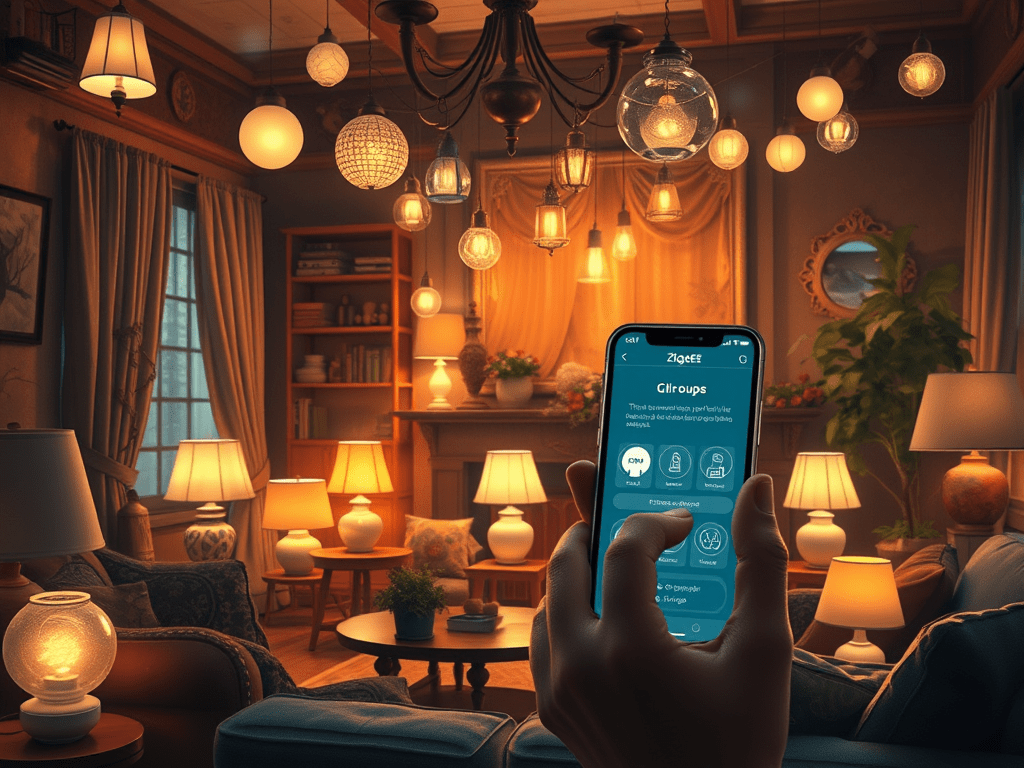
Improving Reliability in Larger Zigbee Networks Using Zigbee Groups

In the world of smart homes 🏠, Zigbee networks are a popular choice for connecting a multitude of devices. However, as the number of devices increases, maintaining network reliability can become a challenge. In this article, we’ll explore how using Zigbee groups can reduce network traffic and improve reliability, based on my personal experience with a large Zigbee network.

The Problem

With around 150 devices in my home, I started experiencing issues where some lamps wouldn’t turn on or off as expected. After some investigation 🔍, I discovered that the high traffic on the network was causing these reliability issues. This is a common problem in larger Zigbee networks, where the sheer volume of messages can overwhelm the network.

Continue reading “Improving Reliability in Larger Zigbee Networks Using Zigbee Groups”